
A wide, shallow lake mirrors the white dome of an ancient stupa across the water. White-clad pilgrims walk the path along the bund. In the distance, just before the sun drops, a small herd of elephants emerges from the bush on the far shore to drink at the water’s edge. They are quiet about it; you stand quiet about it.
The Story
Tissamaharama Lake — locally Tissa Wewa — is a 2nd-century-BCE irrigation tank in the southern dry zone, on the edge of the small town of Tissamaharama (the standard base for Yala safaris). The tank was commissioned by King Kavantissa, the father of King Dutugemunu, around 200 BCE. It’s one of a chain of ancient irrigation tanks across the southern lowlands — a hydraulic civilisation built on the principle that no rain should reach the sea unused.
On the eastern shore of the lake stands the Tissamaharama Stupa — a vast white dome, one of the largest in Sri Lanka, built by King Kavantissa around the same period. The stupa marks a sacred site associated with a visit of the Buddha himself, according to tradition; the relic chamber holds ancient deposits, and the structure has been continuously revered for over 2,200 years. Restoration in the 19th and 20th centuries has given the dome its current bright white finish, and the precinct is a working temple with regular pilgrim activity. The image in our caption the lake reflects an ancient stupa — white dome mirrored in still water — is exactly the view from the western shore at first or last light.
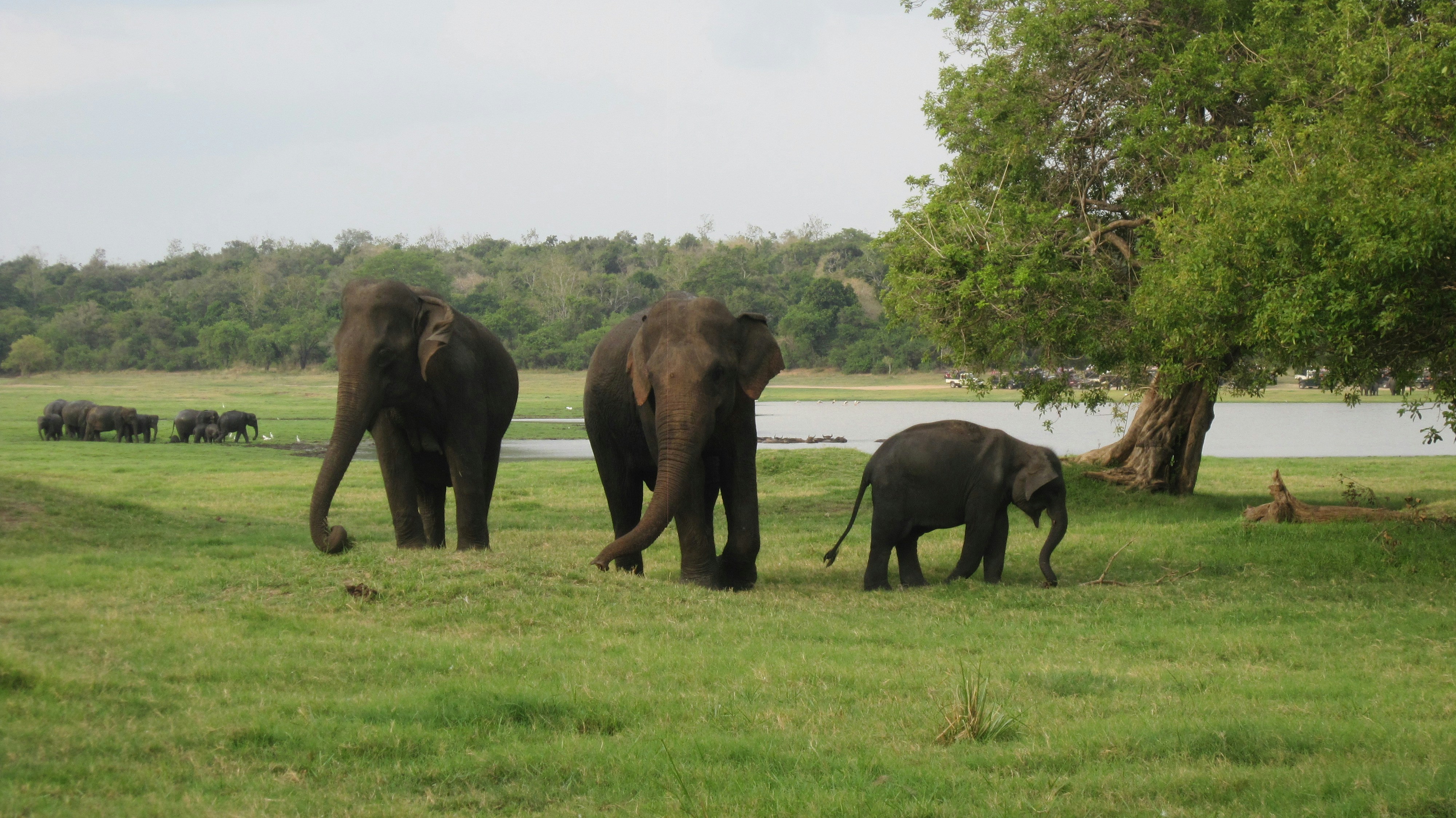
The lake has a particular wildlife dimension. Yala National Park, the great wildlife reserve, lies just east; the buffer forest between the park and the lake is unfenced, and elephants regularly walk down to the lake’s shore to drink, especially in the dry months. Sightings from the lake-side road, particularly in the late afternoon, are not uncommon. The image elephants visit the lakeside in the dry season refers to exactly this. You don’t need a jeep or a park ticket; you just need to be patient and quiet and to know the right hour.
Tissamaharama town itself is small, with a strong agricultural base, several mid-range hotels for safari travellers, and a long-running pilgrimage tradition tied to the stupa. The lake-side road is the heart of the town; small temples, the iconic prayer flags ripple in the dry-zone breeze (caption-image of pilgrim flags on the lake’s shore), and the slow rhythms of small-town southern Sri Lanka all happen here.
What You'll Experience
Walk the lake-side road at sunset. From most Tissamaharama hotels it’s a 10-minute walk or a 5-minute tuk-tuk to the bund road that runs along the lake’s western shore. The path is paved, gentle, and used by both pilgrims and locals on evening walks.
Start about an hour before sunset. The light is already softening; the white dome of the stupa across the water is taking on its golden tone. Walk slowly along the bund. White-clad devotees pass you in groups, headed to or from the stupa for evening prayers. Small stalls sell lotus flowers and king coconut. The image pilgrim flags on the lake’s shore — small devotional flags strung along the path — is what you’re walking past.
About halfway along the bund, find a spot on a stone bench or a low wall. Sit. The lake stretches before you; the stupa is reflected. Birds work the shallows — egrets, herons, the occasional pelican. The light begins to drop. Then, if you’re patient and the dry season is doing its work, you may see them: a small herd of elephants — three, four, six animals — emerging from the bush on the far shore to drink.
The elephants are the wild herd of the Yala buffer; they don’t come every evening, and they don’t come on a schedule. But during the dry months (May–September, and especially August–September), sightings are frequent enough that hotel staff will tell you which hour to be there. The image a herd at the water’s edge lands here. Watch in silence. The herd drinks for ten or fifteen minutes; the matriarch tests the wind; they retreat into the bush.
Walk the rest of the bund as the light goes. Cross to the eastern shore for a stupa visit — leave shoes, walk clockwise, light an oil lamp if you wish. By the time you walk back to your hotel for dinner, the day will feel quietly settled. The contrast with the early-morning Yala safari that follows is deliberate: ancient water, slow elephants, white stupa, then 5am wake-up for the wild leopards next door.
Practical Details
- Location: Tissamaharama, Southern Province — the standard base for Yala safaris
- Getting There: Most Tissamaharama hotels are within walking distance. About 4 hours by car from Colombo via the Southern Expressway.
- Best Time to Visit: Year-round. The hour before sunset is best for both light and elephant sightings. Dry season (May–September) offers the highest elephant probability.
- Entry: Free for the lake-side road. Stupa visits welcome a small donation.
- What to Bring: Modest clothing for the stupa visit, comfortable walking shoes, water, light layer for the breeze, mosquito repellent for the sunset hour, binoculars for distant elephants.
Pair It With
- Yala National Park — You’re in the safari base — pair the lake at sunset with a 5am Yala departure.
- Kirinda Beach — A 20-minute drive east — combine with a dawn beach walk before the safari.
- Mulkirigala Rock Temple — On the road back west — round out a southern itinerary.
Why It Belongs on Your Sri Lanka Journey
Tissamaharama Lake is the slow southern counterpart to the kinetic Yala safari — a place to walk, sit, and watch wild elephants visit a 2,300-year-old tank without a jeep, a ticket, or a queue. We build it into Yala stays as the late-afternoon arrival ritual on the day you check in: hotel, walk to the lake, sunset on the bund, dinner, sleep. By the time you’re up at 5am for the safari, the dry-zone southern landscape is already in your eyes. For Dutch and Belgian travellers used to the layered antiquity of European cities, the simple presence of a 22-century-old lake — still functioning, still feeding the surrounding paddy fields — tends to be the kind of detail that lingers.
Plan your visit to Tissamaharama Lake with DBRO
We design slow, considered Sri Lanka itineraries from our base on the island, with a particular ear for travellers from the Netherlands and Belgium. If Tissamaharama Lake is on your shortlist, we’ll fit it into a route that lets it breathe.
Useful next reads:

