
You step under an avenue of royal palms — straight as a colonnade, taller than a five-storey building — and the heat falls away into dappled green. Somewhere up the path a flock of fruit bats hangs from a banyan, and you catch the sweet, slightly fermented smell of mango drifting off a tree.
The Story
The Royal Botanical Gardens at Peradeniya, set in a wide bend of the Mahaweli River about 5 kilometres west of Kandy, are the largest botanical gardens in Sri Lanka and among the oldest of their kind in Asia. The site has a long pedigree: it was used as a royal pleasure garden under the Kandyan kings, formally laid out as a botanical garden by the British in 1821, and progressively expanded through the 19th century with avenues of palms, orchid houses, a large arboretum, and demonstration plots for spice and crop trials.
The gardens cover about 60 hectares — large enough to feel like a forest in places and small enough to walk in a single morning. The collection runs to several thousand plant species, with a particular strength in tropical economic plants (tea, rubber, cinnamon, nutmeg), an excellent orchid house, a giant Javan fig whose lateral spread covers about 2,500 square metres, and a cluster of avenues planted by visiting heads of state in the early 20th century — the Tsar Nicholas avenue, the Edward VII avenue, and others.
For Sri Lankans, the gardens are a beloved Sunday institution; you’ll see picnics, courting couples, school groups, and grandparents on every bench. For European visitors, particularly travellers from the Netherlands and Belgium with their own deep botanical-garden tradition, Peradeniya feels both familiar in form — the avenues, the orchid house, the parterre — and quietly transformed by the climate.
What You'll Experience
Arrive when the gates open at half past seven. The path inside the main entrance leads straight onto the great central lawn, with the river curving around its far edge. You’re immediately under the avenue of royal palms, and the morning light is doing the kind of work it does in cathedrals — shafts of green coming down between the trunks. Take your time on this stretch; everyone tries to photograph it, and few photographs work.
Veer right toward the orchid house. The collection is small but consistently in flower; the Vanda hybrids and Cattleya from the warmer side of the country do particularly well. Beyond it lies the spice garden — small plots of cinnamon, clove, cardamom, vanilla orchid — where staff are usually happy to crush a leaf for you to smell. The smell of crushed cinnamon bark, fresh from the tree, is unforgettable.
Walk down to the giant Javan fig. The tree is its own small landscape: aerial roots dropping vertically from horizontal branches, an understorey of seedlings, light filtered green and gold. From here, the path winds along the river bank — egrets in the shallows, monitor lizards on the warm stones — and back across the central lawn for the loop home. Stop at the small cafe near the gate for a king coconut. The whole walk takes two unhurried hours; with the orchid house and the cafe, three.
Practical Details
- Location: Peradeniya, about 5 km west of Kandy, Central Province
- Getting There: A 15-minute drive from central Kandy. Easiest with a private driver who can wait for you at the gate; tuk-tuks are cheap and plentiful.
- Best Time to Visit: Dry season January to April. Arrive at opening (around 7:30am) to walk in cool air. Avoid Sundays and public holidays unless you enjoy a busy garden.
- Entry: Around USD 10–15 for foreign visitors (verify current rates). Children pay a reduced fee.
- What to Bring: Sun hat, water, sunscreen, comfortable shoes for a long walk, and a light layer for the morning.
Pair It With
- Kandy Lake — A lake walk at first light, then the gardens for the rest of the morning — a classic Kandy day.
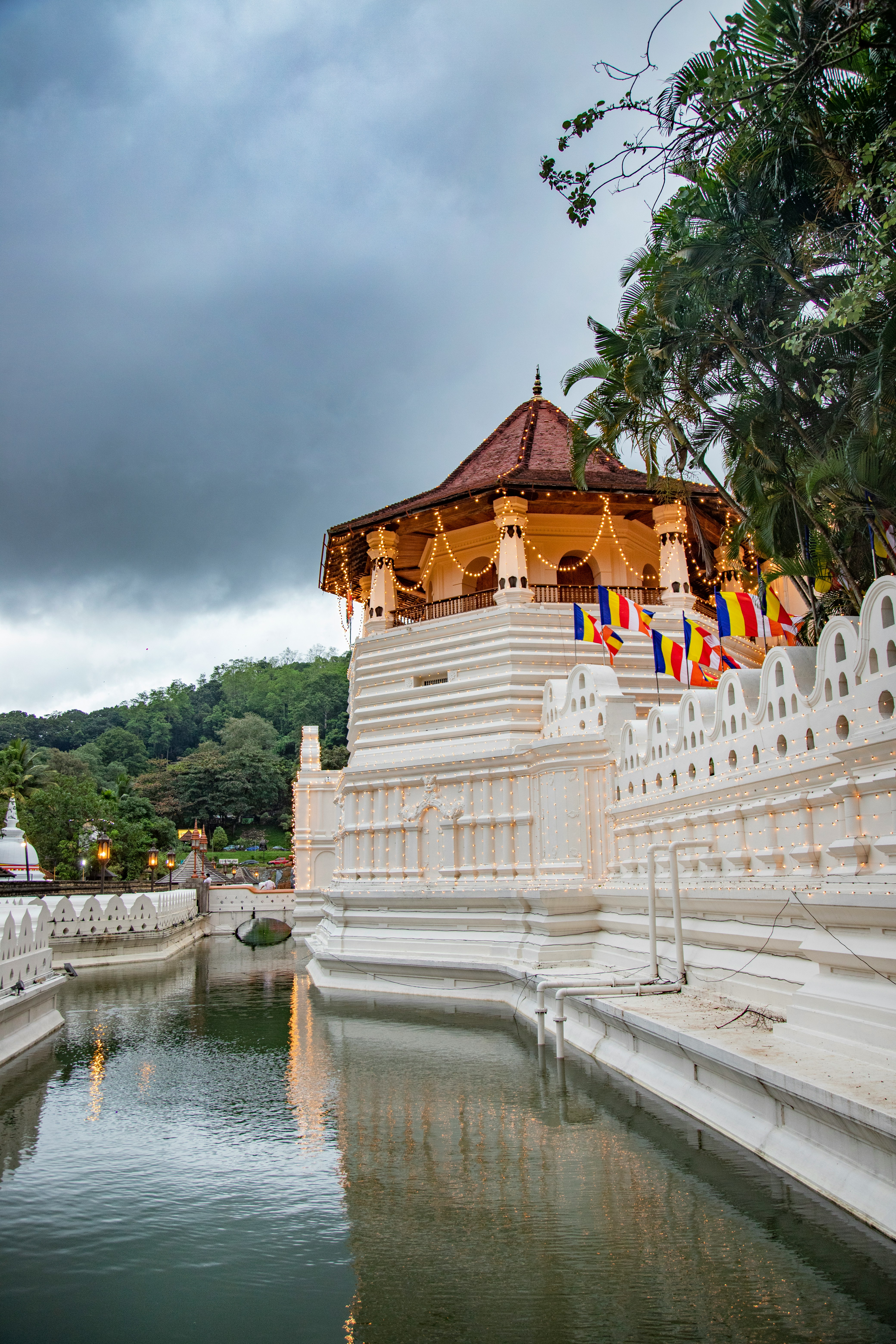
- Temple of the Tooth — A late afternoon temple visit pairs naturally with a morning in the gardens.
- Ambuluwawa Tower — On the road south of the gardens — combine with the tower for a full Kandy-region day.
Why It Belongs on Your Sri Lanka Journey
Peradeniya is one of those rare botanical gardens that delivers on its name without being precious about it — working trees, a small but excellent orchid house, and avenues that have been walked under by colonial governors, royal visitors, and generations of Sri Lankan families on Sunday outings. We build it into a Kandy stay as a slow second-day morning, paired with the Temple of the Tooth in the late afternoon. Travellers from Amsterdam and Brussels often tell us the gardens were the moment Sri Lanka’s botanical scale finally landed.
Plan your visit to Royal Botanical Gardens, Peradeniya with DBRO
We design slow, considered Sri Lanka itineraries from our base on the island, with a particular ear for travellers from the Netherlands and Belgium. If Royal Botanical Gardens, Peradeniya is on your shortlist, we’ll fit it into a route that lets it breathe.
Useful next reads:

