
You leave the guesthouse at half past four, head torch on, and walk through the warm dark to the small temple at the base. Forty-five minutes of climb later — the last stretch a real scramble between boulders — you’re sitting on a flat slab of warm rock as the sun rises behind Sigiriya. The famous fortress glows red, then gold, in front of you.
The Story
Pidurangala Rock is the smaller, rougher granite outcrop about two kilometres north of Sigiriya, separated from the larger fortress by a stretch of dry-zone forest. It’s perhaps 200 metres tall — about a third of Sigiriya’s height — and offers, by general consensus, the best view of the famous fortress that exists. It’s also a working Buddhist monastery, occupied continuously since the 5th century, when King Kasyapa I (the same king who built Sigiriya) cleared the existing monks off Sigiriya itself and rehoused them on Pidurangala in compensation. The lower temple at the base of the climb is still in use.
The climb is the appeal. It’s shorter than Sigiriya — about 45 minutes up — but rougher and more authentic. The first half is a stone-stair path that climbs through forest; the second half is a boulder scramble where you use your hands as much as your feet. There’s a small reclining Buddha statue carved into the rock about two-thirds of the way up — bring a respectful pause and a small donation if you have one. The final scramble onto the summit slab is the hardest part; some travellers turn back here, and that’s fine. The views from the lower terraces are also excellent.
The summit slab is wide, flat, and mostly safe — though the edges are steep and unguarded; stay back from them. From the top, you have a 360-degree view: Sigiriya rises a few kilometres to the south, the dry-zone forest extends to the horizon in every direction, and on a clear morning you can see all the way to the high hills of the Matale district to the south-west. The sunrise photograph from Pidurangala — Sigiriya silhouetted against the rising sun — is one of the most-reproduced single images of Sri Lanka.
What You'll Experience
Get up at four. Your driver will take you to the temple at the base; the climb begins from there. Pay the entrance fee at the small ticket office (it’s technically a temple donation), put on your head torch, and start up the stone path. The first 20 minutes are easy — broad steps cut into the forest floor. You’ll pass a small monk’s cell and a meditation cave.
The middle section steepens. The path becomes rougher; tree roots take over from cut stone. You pass the reclining Buddha — a small recumbent figure carved into a sheltered overhang, with offerings of incense at his feet. The image monks ascend at first light in our caption refers to this stretch — the Buddhist character of the climb is real and present.
The last 100 metres is the boulder scramble. You’re using your hands now, climbing through gaps in the granite. There are two short sections that feel exposed; take your time, watch your footing. By the time you crest the final slab, the sky is beginning to pale. You walk out onto the flat summit. Sigiriya rises in the dark to the south.
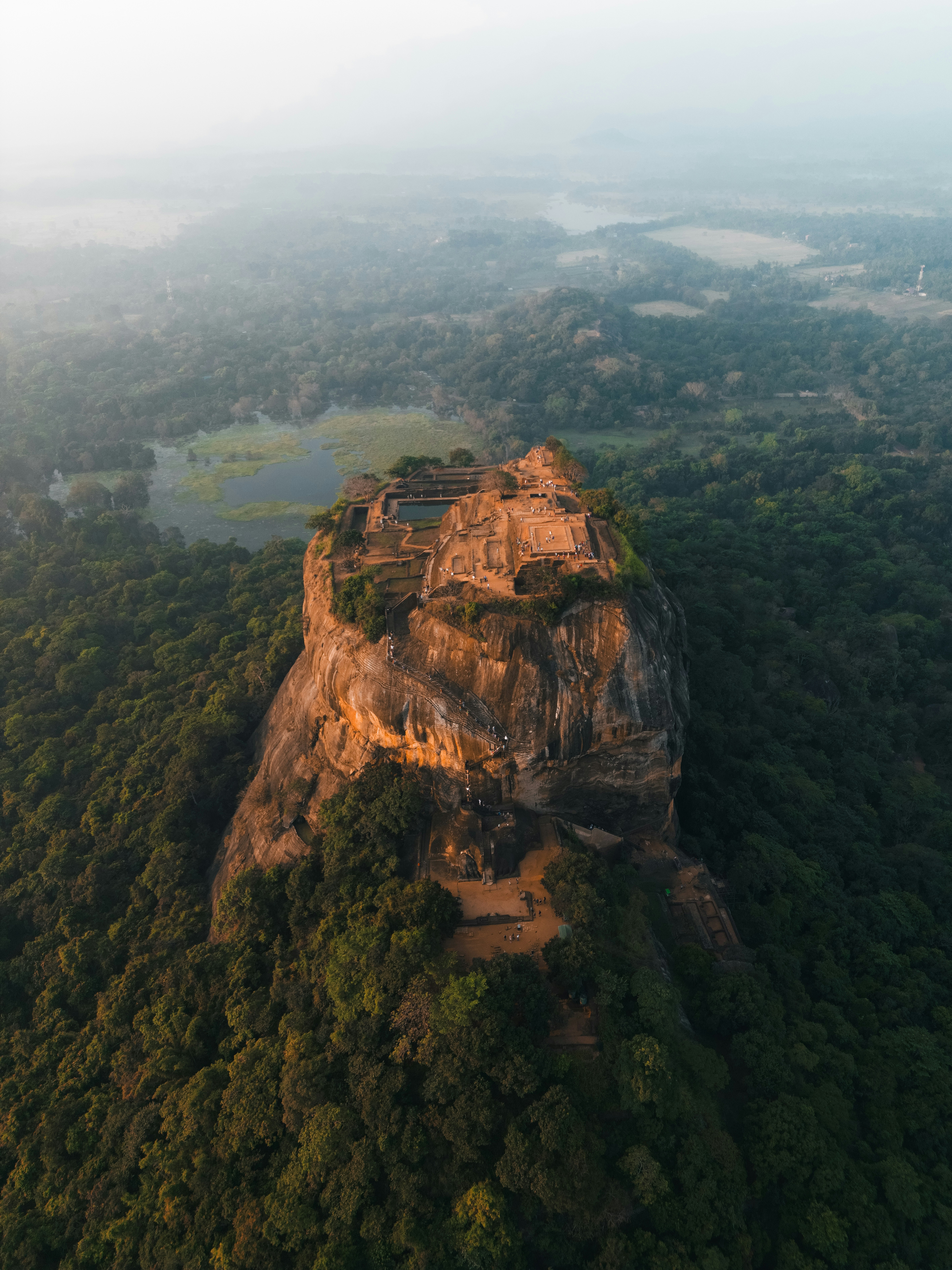
Find a spot on the western lip of the rock. Sit. The sky goes from pewter to grey to rose to gold over twenty minutes. Sigiriya, opposite, catches the light first on its eastern face — a long red glow that creeps down the rock as the sun rises behind you. The image Sigiriya Rock as seen from Pidurangala’s summit — the postcard view of the fortress floating above the jungle — is exactly this. Stay until the sun is properly up; descend slowly. Breakfast back at the guesthouse with the day still in your eyes.
Practical Details
- Location: About 2 km north of Sigiriya village, North Central Province
- Getting There: A 5-minute drive from any Sigiriya hotel. Most guesthouses arrange the early-morning pickup.
- Best Time to Visit: May to September is driest. Pre-dawn arrival (around 5am) for the sunrise climb. Afternoon climbs are also possible but the rock is hot and the view is back-lit.
- Entry: Around USD 5–8 per person at the temple gate (verify current rates).
- What to Bring: Head torch (essential), sturdy shoes with grip, water, light layer for the dawn cool, breakfast snack for the top, modest clothing for the temple section.
Pair It With
- Sigiriya Rock Fortress — Climb Pidurangala for the view of Sigiriya, then visit Sigiriya itself the following day.
- Minneriya National Park — Pre-dawn Pidurangala, breakfast, rest through midday, Minneriya safari at 3pm — a classic Cultural Triangle day.
- Dambulla Cave Temple — A short drive south — combine with Pidurangala on a slow Triangle morning.
Why It Belongs on Your Sri Lanka Journey
Pidurangala is the Cultural Triangle’s best-kept open secret — a real climb, a real view, a real working monastery, and the postcard photograph of Sigiriya floats above your morning. We typically build it into a Sigiriya stay as the alternative-or-supplement to the famous rock itself: a Pidurangala sunrise on day one, a Sigiriya climb on day two. Travellers from Amsterdam and Brussels who weren’t sure about the Sigiriya entrance fee often find Pidurangala the more rewarding climb anyway. Bring a torch and walk slowly.
Plan your visit to Pidurangala Rock with DBRO
We design slow, considered Sri Lanka itineraries from our base on the island, with a particular ear for travellers from the Netherlands and Belgium. If Pidurangala Rock is on your shortlist, we’ll fit it into a route that lets it breathe.
Useful next reads:

