
The auctioneer’s voice cuts the air at half past five — fast, rhythmic, half-sung. Tuna are laid in dripping rows on the sand; a ten-kilogram seer fish gets carried past on a man’s shoulder. The smell is salt, ice, and the strange iron-sweetness of fresh fish. Nobody, in this entire crowd of two hundred people, has had coffee yet, and somehow it doesn’t matter.
The Story
The Negombo Fish Market — known locally as Lellama — is the largest fresh fish market in Sri Lanka and one of the most atmospheric pre-dawn scenes on the island. The market sits at the mouth of Negombo Lagoon, where the lagoon meets the sea, and operates as a working auction yard rather than a retail stall. Boats come in through the night, the catch is sorted on the sand, the auction starts in the dark and runs through the dawn, and by mid-morning most of the day’s fish has already been sold to wholesalers and restaurants from Colombo and the surrounding districts.
The market is centuries old as a fishing concern. The Portuguese, who converted much of the Negombo population to Catholicism, supported the local fishing industry; the Dutch later organised it; the British formalised the export trade. Today the market is run by the local fisheries cooperative, with auctioneers, weighers, and traders all operating in a fast, informal, well-understood rhythm.
The catch varies by season. In the south-west monsoon (May to October) the seas are rougher and the catch is smaller; in the dry season (November to April) the boats come in heavier. Tuna, seer fish, mackerel, prawns, squid, crabs, and a long list of local reef fish all pass through the auction. There’s also a parallel dried-fish market on the inland side of the lagoon — vast tables of small fish drying in the sun, the smell unmistakable. A separate visit, if you’re curious.
This is a working market, not a tourist event. Visitors are welcome, and several morning tours include it, but you’ll be threading between actual fishermen and traders, not following a guided lane. Be respectful of the work happening around you.
What You'll Experience
Get up at half past four. Your driver will pick you up in the dark; the market is a 5-minute drive from any central Negombo guesthouse. Arrive at five. The first stalls are already laying out catches; the auctioneers’ voices begin within minutes of your arrival. The light is grey-blue; everything happens in the half-dark.
Walk slowly. Tuna are stacked in dripping rows on the sand, dorsal fins still curled from the fight. A boy of maybe twelve carries a yellow-finned tuna nearly his own size on his shoulder. An auctioneer paces beside a row of seer fish, the staccato of his bid-call cutting the air. People are working; you’re a visitor; everyone is friendly but nobody is performing for you.
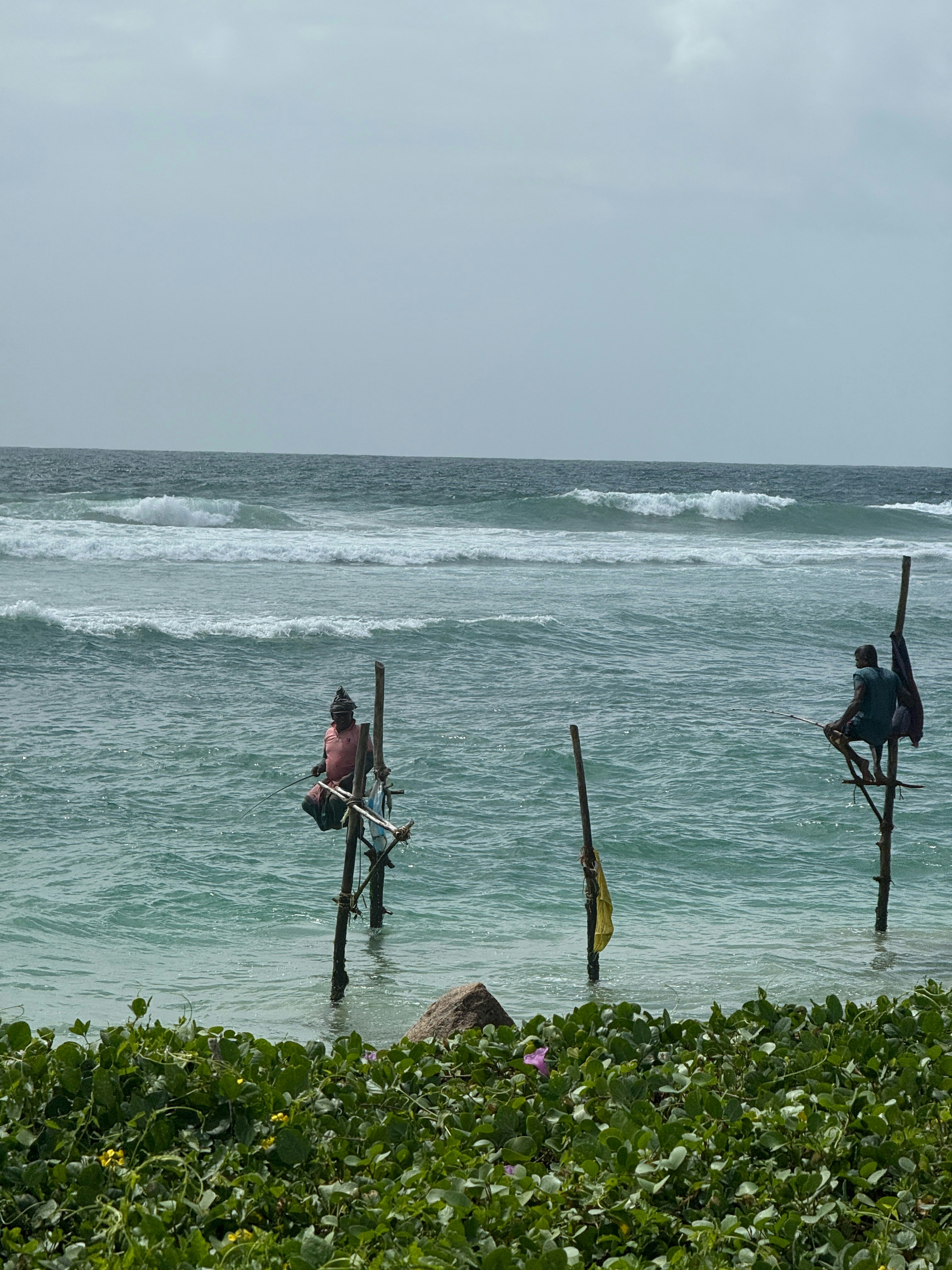
Move toward the boats themselves. The fishing fleet here is a mix of larger trawlers and traditional outrigger canoes — the same shapes that have been used on this coast for centuries. Boats are unloading by lamplight, ice melting on the deck. The catch goes into woven plastic baskets and is carried up the sand by chains of men. The whole scene is captured in our caption the morning auction at the harbour — a working continuation of a centuries-old maritime craft.
By half past six the dawn is breaking and the auction is winding down. Walk back along the beach to your guesthouse for breakfast. The smell of fresh fish will be on your hands and clothes for half the morning; nobody minds.
Practical Details
- Location: Lellama, Negombo Lagoon mouth, Western Province
- Getting There: A 5-minute drive or 10-minute walk from any central Negombo guesthouse. Closest market access is along the lagoon road.
- Best Time to Visit: Year-round; the catch is bigger in the November–April dry season. Arrive between 5am and 6am for the auction in full swing.
- Entry: Free. Tipping fishermen for permission to photograph their catch is appreciated.
- What to Bring: Sturdy shoes (the sand is wet and there will be fish guts), camera, hat for after sunrise, hand sanitiser, a small bag for tips, and a light layer for the dawn cool.
Pair It With
- Negombo Beach — A walk back along the beach for sunrise and a long breakfast.
- Dutch Canal — Pair a pre-dawn market visit with a late-afternoon canal cruise — a complete Negombo day.
- Galle Fish Market — A different fish market on the south coast; combine on a longer trip.
Why It Belongs on Your Sri Lanka Journey
The Negombo Fish Market is one of the few places in Sri Lanka where a tourist visit and the actual working life of the country happen in exactly the same square metre at the same hour. It’s honest and a little raw and entirely worth a 4:30am alarm. Build it into a first or last morning of a Sri Lanka trip — perfectly suited to jet-lagged travellers from Amsterdam who are awake at 5am anyway, and a way of arriving in the country that asks for the senses rather than the credit card.
Plan your visit to Negombo Fish Market with DBRO
We design slow, considered Sri Lanka itineraries from our base on the island, with a particular ear for travellers from the Netherlands and Belgium. If Negombo Fish Market is on your shortlist, we’ll fit it into a route that lets it breathe.
Useful next reads:

