
A long curve of soft sand under a fringe of leaning palms, water that goes warm and shallow for a long way out, and a string of small wooden tables set on the beach for dinner. Mirissa is the south coast’s easiest beach — the one you arrive at meaning to stay two nights and end up staying five.
The Story
Mirissa sits about 150 kilometres south of Colombo, on the same stretch of south coast as Galle, Weligama and Tangalle. The bay is sheltered between two small headlands — Parrot Rock at the eastern end, the Coconut Tree Hill cliff at the eastern edge — which gives the swimming a calmness many Sri Lankan beaches don’t have. For most of the year the water is a friendly chest-deep at twenty metres out, with a sandy bottom and a gentle break.
The bay was a fishing village until the 1990s, with a small tourist scene that grew rapidly through the 2000s and 2010s. The 2004 tsunami hit Mirissa hard — the beachfront was rebuilt over years rather than months — and the second wave of growth came in the late 2010s, with whale-watching becoming a major draw and the town’s identity shifting from sleepy beach to slow-travel hub. The character today is a mix: small family guesthouses, a few stylish boutique hotels, a string of beach-side restaurants run by Sri Lankan families, the occasional yoga retreat, and a still-working fishing harbour at the western end where the morning catch comes in.
The south coast season runs roughly November to April. Outside that, the south-west monsoon brings rougher seas, bigger surf, and grey afternoons; many beach businesses close for two or three months and reopen in October. If you’re visiting in the European summer, the east coast (Trincomalee, Pasikuda, Arugam Bay) is the better bet. From November onwards, Mirissa quietly delivers the kind of long, sociable beach days that the south coast does better than anywhere else on the island.
What You'll Experience
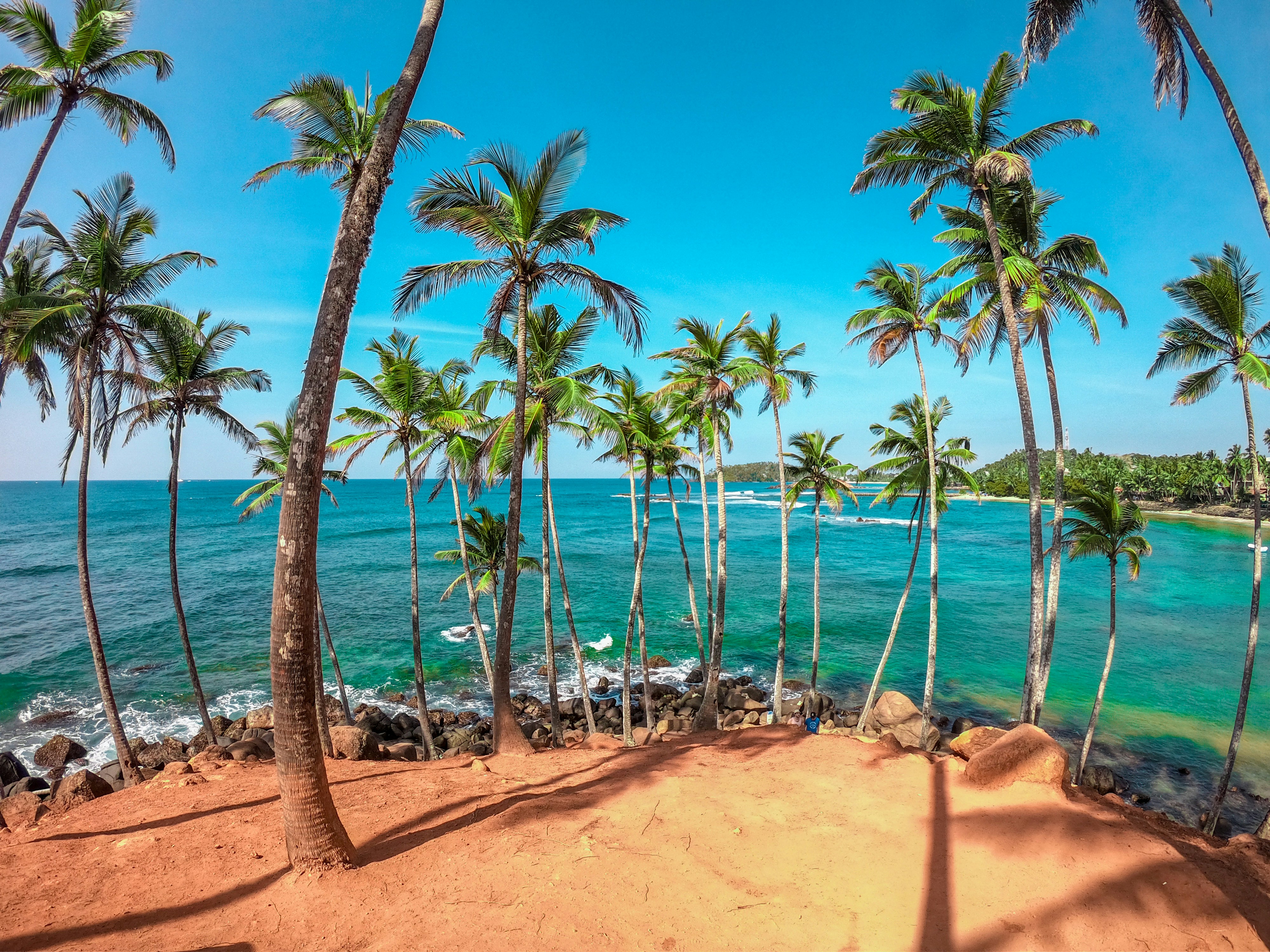
Walk the bay at first light, before the heat builds. From the western end you can look back across the water at the small fishing harbour — bright blue boats hand-painted with eyes on the bows, fishermen sorting nets on the sand. Come round the curve and the bay opens: kilometre of soft sand, ranks of empty wooden sun-loungers waiting for the first guests, palms leaning seaward in the wind.
Swim before lunch. The water is warm and shallow; the bottom is soft sand. Children build castles in the wet zone; surfers paddle out to the small reef break at the eastern end. If you’re not swimming, hire a sun-lounger from one of the beach cafes — the per-day fee usually includes a free coconut and goodwill toward late lunches.
Lunch is rice and curry, again, at a small wooden table set in the shade of a coconut. The plate arrives in five small bowls — dhal, jackfruit, beetroot, sambol, and a hot main of fish — and the rice is unlimited. The owner’s daughter brings you a wedge of fresh papaya you didn’t order. Nap. By late afternoon the wind is up and the light begins to bend toward gold.
Sunset on the beach is the south coast’s gentle daily ritual. Small fires get lit on the sand. Beach restaurants set out tables on the wet zone. You eat grilled prawns or fish curry, drink an arrack soda, and walk barefoot back to your guesthouse afterward with the surf still in your ears. Most people find it harder to leave Mirissa than to arrive.
Practical Details
- Location: Mirissa, about 150 km south of Colombo, Southern Province
- Getting There: About 2.5 hours by car from Colombo via the Southern Expressway, 30 minutes from Galle Fort. Coastal trains run from Colombo to Weligama (the closest station, about 10 minutes by tuk-tuk).
- Best Time to Visit: November to April for the south-coast dry season. May to October the sea is rougher; some beach businesses close.
- Entry: Free to walk in. Beach restaurants and sun-lounger hire charge as you go.
- What to Bring: Swimwear, reef-safe sunscreen, hat, mask and snorkel if you have them, a beach towel, and a light layer for the breezy evenings.
Pair It With
- Coconut Tree Hill — A 10-minute walk along the beach for sunrise on the headland.
- Parrot Rock — The little tide-rock at the eastern end — climb at low tide for a 360-degree bay view.
- Whale Watching from Mirissa — Pre-dawn boat trip from the small harbour — combine with an unhurried beach day after.
Why It Belongs on Your Sri Lanka Journey
Mirissa is the south coast in the most relaxed mood we know how to arrange. Build it into a Sri Lanka trip as the soft landing after the Cultural Triangle, or as the long final stretch before the flight home from Colombo. We typically combine three or four nights in Mirissa with a night or two inside Galle Fort and a half-day at Tangalle further east. For Dutch and Belgian travellers used to the discipline of structured holidays, the bay’s gentle anarchy of meal times and sunset walks tends to be exactly the kind of holiday they didn’t know to ask for.
Plan your visit to Mirissa Beach with DBRO
We design slow, considered Sri Lanka itineraries from our base on the island, with a particular ear for travellers from the Netherlands and Belgium. If Mirissa Beach is on your shortlist, we’ll fit it into a route that lets it breathe.
Useful next reads:

