
Climb the first granite steps and the dry-zone forest closes behind you. Higher up, you reach a flat platform of warm stone and a view of the plain that stretches all the way back to Anuradhapura — and you understand, in your legs and your breath, why this hill has mattered for over two thousand years.
The Story
In 247 BCE, the chronicles tell us, the Indian emperor Ashoka sent his son — the monk Mahinda — to Sri Lanka with a mission. Mahinda found King Devanampiyatissa hunting on the slopes of this same hill, surprised him, tested his understanding with a riddle about a mango tree, and converted him on the spot. The conversion of the king became the conversion of the island, and Mihintale became the place where Sri Lankan Buddhism began.
The hill is therefore older than every great monument at Anuradhapura — older as a spiritual site, if not as architecture. What you climb today is a pilgrim path of about 1,840 stone steps, broad and shallow, polished smooth by bare feet. They lead past monastic ruins, refectories where the soup-bowls of monks are still recognisable in carved stone, an old hospital site that may be one of the world’s earliest, and dozens of small dagobas (stupas) standing among rocks. Near the summit, a smaller hill called Aradhana Gala — the Meditation Rock — is where Mahinda is said to have first preached. The view from the top, even more than the view from Sigiriya, feels earned.
In June every year, on Poson Poya, hundreds of thousands of white-clad pilgrims walk these stairs in a single night, candles in their hands, and the whole hill becomes a slow river of light. Most of the year, though, you’ll meet only small groups of devotees, a few monkeys, and the wind.
What You'll Experience
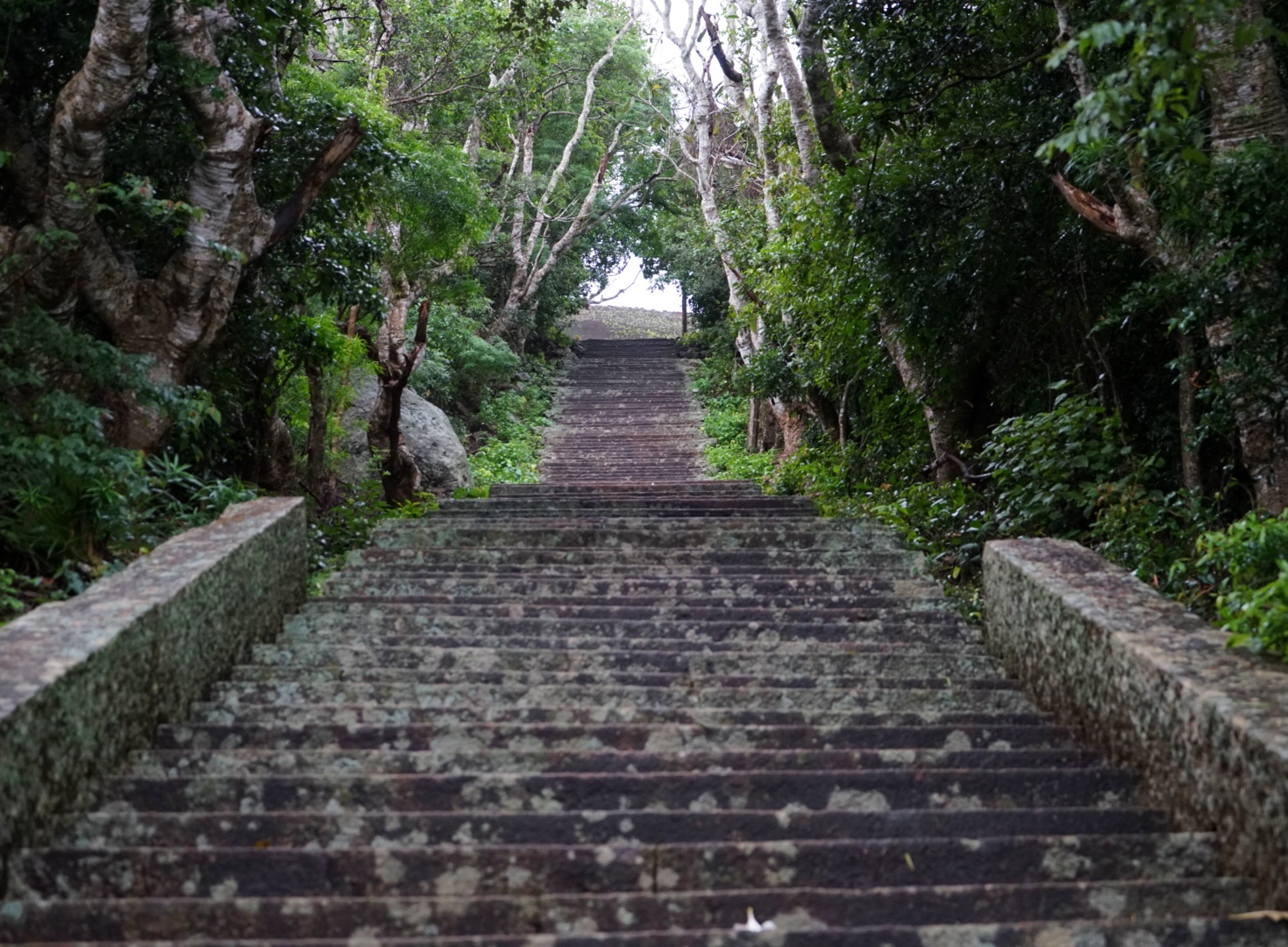
Take the climb in stages. The first set of steps is generous — you can walk three abreast — and shaded by frangipani. After about 20 minutes you reach the first plateau, where ancient stone slabs mark the foundations of a monastic college. Sit a moment. The cicadas keep up their hot-weather percussion. Pilgrims walk past with bunches of flowers wrapped in plantain leaves.
The path narrows and steepens. Stop at the Kantaka Chetiya, a small dagoba carved with frieze panels — geese, dwarves, lotus medallions — among the most refined sculpture from the Anuradhapura period. Above this, the steps cut between great granite outcrops. By now you’re sweating and the temperature has dropped a little; you’re catching the breeze.
The summit splits in two. To the right, Aradhana Gala, a bare granite dome with iron handrails — climb it for a 360-degree view of the entire ancient city. To the left, the Mahaseya stupa, white and rounded, where pilgrims press their foreheads to the warm stone. From up here you can see Ruwanwelisaya rising in the distance like a small white moon against the green, and you understand why a king once said yes to a monk on this hill.
Practical Details
- Location: About 12 km east of Anuradhapura, North Central Province
- Getting There: A 20-minute drive from central Anuradhapura by tuk-tuk or car. No public bus reaches the top — most travellers combine it with the sacred city in a single day.
- Best Time to Visit: Climb before 8am or after 4pm. Dry season (May–September) is best. Avoid Poson Poya in June unless you want to be in the largest pilgrimage crowd of the year.
- Entry: A separate entrance fee (around USD 5–8 for foreign visitors — verify current rates). Footwear must be removed at the upper terrace.
- What to Bring: Lots of water, a hat, modest clothing, decent walking shoes for the lower path, and socks for the hot upper steps if the day is hot.
Pair It With
- Jethawanaramaya — The vast brick stupa back in Anuradhapura — the natural visual companion to Mihintale’s pilgrim spirit.
- Ruwanwelisaya — Plan the two together: climb Mihintale at first light, descend, and walk the Great Stupa in the afternoon.
- Sri Maha Bodhi — The sacred Bodhi tree at the heart of Anuradhapura, planted from the same tree under which the Buddha gained enlightenment.
Why It Belongs on Your Sri Lanka Journey
Most of the great cathedrals in Europe took two or three hundred years to finish. Sri Lanka’s sacred mountain has been continuously walked, prayed on, and added to for over twenty-three centuries. That’s the gentle fact you take home from Mihintale — not the steps, not the views, but the slow, layered patience of the place. It pairs beautifully with a Cultural Triangle itinerary that gives Anuradhapura the two days it deserves rather than the half-day most tour buses allow.
Plan your visit to Mihintale with DBRO
We design slow, considered Sri Lanka itineraries from our base on the island, with a particular ear for travellers from the Netherlands and Belgium. If Mihintale is on your shortlist, we’ll fit it into a route that lets it breathe.
Useful next reads:

