
You walk through a small painted gateway and out onto a high stone platform. The Indian Ocean stretches blue to the horizon 130 metres beneath your feet. A bell rings somewhere behind you; the smell of camphor and warm stone hangs in the air. A single black cormorant cuts the air over the sea below.
The Story
Koneswaram Temple — its full name is Konesar Kovil — is one of the great Hindu temples of South Asia, set on the dramatic cliff at the eastern end of Trincomalee’s Swami Rock. The site is one of the Pancha Ishwaram, the five historic shrines to Shiva on the island of Sri Lanka, and one of the most sacred places in Tamil Hindu cosmology. References to the temple appear in the Tamil literature of the early centuries CE, and the existing shrine is built on the site of a much older one continuously revered for over 2,000 years.
The original temple — a vast complex described by 16th-century Portuguese accounts as one of the wonders of Asia — was destroyed in 1622 by the Portuguese, who pushed the temple’s gold and bronze deities off the cliff into the sea below. (Several have since been recovered by divers; one is now in the Trincomalee museum.) The current temple is a more modest reconstruction, begun in the 1950s and continually expanded since, with painted gopuram (gateway towers), an inner sanctum to Shiva, and surrounding shrines to other deities. The site is a major pilgrimage destination for Tamil Hindus from across South India and the Sri Lankan diaspora.
Swami Rock — the cliff itself — has its own deep history. Local tradition identifies a small carved inscription on the cliff face as the marker of the so-called Lover’s Leap, where a Dutch governor’s daughter is said to have thrown herself into the sea after a forbidden romance. The cliff also offers one of the best whale-watching positions on the east coast: in the right months, blue whales pass close to shore, visible from the temple platform. Brahminy kites and white-bellied sea eagles soar at eye-level off the cliff edge.
What You'll Experience
Drive up from central Trincomalee — the climb to Swami Rock is a steady 5-minute drive, with the temple grounds at the very tip of the headland. Parking is at the entrance gate; remove shoes and head coverings (wear modest clothing; a sarong is welcome) before entering the temple precinct.
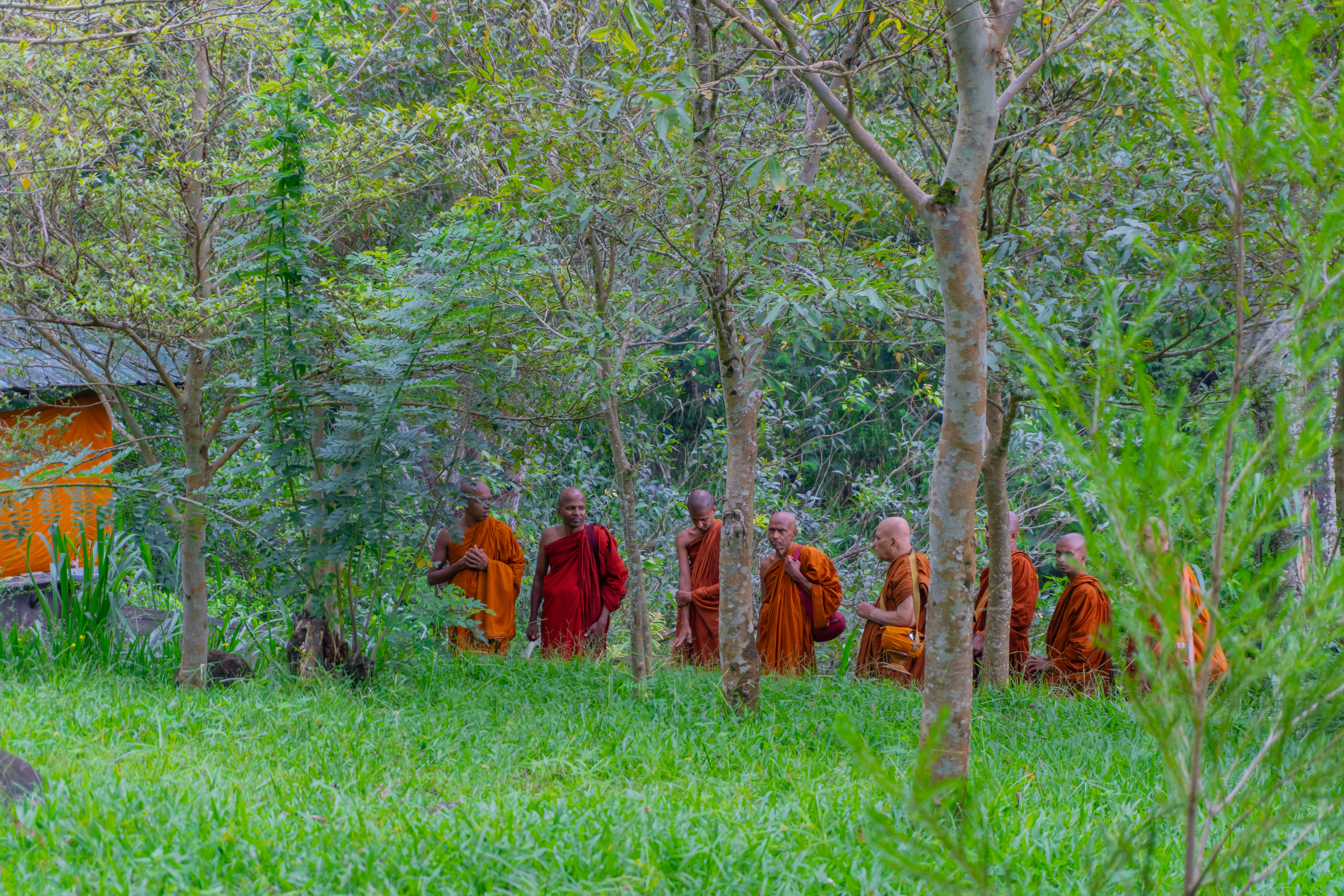
Walk through the painted gopuram. The entrance compound is busy with pilgrims, many of them having come long distances; you’ll see white-clad and saffron-clad devotees, families with offerings of flowers and coconuts, and small groups of monks performing the slow rituals of the temple. The inner sanctum is small; non-Hindus may be welcome to stand at the threshold but generally don’t enter the deepest shrine.
Walk to the eastern edge of the platform. The view is the entire reason most travellers come: a vertical cliff, the Indian Ocean stretching east to the horizon, and on a clear morning, the small fishing boats of the Trincomalee fleet visible far below. The image in our caption the bay seen from the temple cliff — east-coast water below the cliff edge — is exactly this view. The cliff is unguarded in places; mind small children and the strong wind that often blows up the rock face.
Look for the cliff’s wildlife. Brahminy kites and white-bellied sea eagles patrol the air at temple-level. In the right months (March–September), pods of dolphins are visible offshore; on the rarest mornings, blue whales surface within sight of the cliff. The image prayer flags catch the sea wind refers to a small string of flags often tied along the cliff rail — devotional offerings that the wind has burnished smooth.
Spend an hour on the platform. By the time you walk back to the gate, the light will have shifted; the temple will be busier (or quieter); and you’ll have one of the few cliff-top sacred sites in Sri Lanka in your memory.
Practical Details
- Location: Swami Rock, Fort Frederick, Trincomalee, Eastern Province
- Getting There: A 5-minute drive from central Trincomalee through Fort Frederick. The temple is at the tip of the headland.
- Best Time to Visit: May to September is dry. Sunrise (around 6am) or late afternoon (4–5pm) for the best light. Avoid the lunchtime closure and the busiest pilgrimage festivals unless you want crowds.
- Entry: Free. A small donation to the temple is welcome but not expected.
- What to Bring: Modest clothing covering shoulders and knees, a sarong, head covering for women if you want one, water, hat, sunscreen, and a small bag for the temple offerings if you’re inclined.
Pair It With
- Nilaveli Beach — A 30-minute drive north — combine the temple with an afternoon at Nilaveli or Pigeon Island.
- Marble Beach — A 20-minute drive south — sheltered swim before the temple visit at sunset.
- Pigeon Island National Park — Snorkel-trip island off Nilaveli — a perfect morning before an afternoon at Koneswaram.
Why It Belongs on Your Sri Lanka Journey
Koneswaram is the east coast’s sacred centre — a working Hindu temple on one of the most dramatic clifftop positions on the island, layered with two thousand years of devotion and a thousand years of architectural history. We build it into a Trincomalee stay as a sunrise visit before a beach day, or as a late-afternoon stop before sunset on the cliff. For Belgian and Dutch travellers used to the great cathedrals of Europe, the cliff-and-cosmos combination here lands as something genuinely different — a sacred site that has the open sea instead of a stone vault overhead.
Plan your visit to Koneswaram Temple with DBRO
We design slow, considered Sri Lanka itineraries from our base on the island, with a particular ear for travellers from the Netherlands and Belgium. If Koneswaram Temple is on your shortlist, we’ll fit it into a route that lets it breathe.
Useful next reads:

