
A herd of small elephants — calves, some no taller than a child — comes single-file out of the forest at the sound of the lunchtime whistle. They line up at a long fence, take milk from large bottles held over the rail, and a few minutes later wander back into the bush as quietly as they arrived. The whole thing takes ten minutes. It’s one of the most well-organised conservation moments in Sri Lanka.
The Story
The Elephant Transit Home — locally Atha Athuru Sevana — is a wildlife department facility on the edge of Udawalawe National Park, established in 1995 specifically to rehabilitate orphaned wild elephant calves and return them to the wild. The setup is fundamentally different from the older Pinnawala Elephant Orphanage near Kandy: at Pinnawala, elephants live and breed permanently in semi-captivity and tourists can interact with them closely; at Udawalawe, the calves are deliberately kept at arm’s length from humans, fed at scheduled intervals, and released back into the surrounding national park as juveniles capable of survival.
The model has been broadly successful. Over the years, the Transit Home has rehabilitated and released several hundred elephants, with measured post-release survival and integration with wild herds. Calves arrive at the home for various reasons — separation from their mothers in human-elephant conflict, injury, abandonment — and are kept for two to three years before release. Visitor access is strictly limited to a viewing platform during the four daily feeding times; you cannot enter the enclosures, touch the elephants, or feed them yourself, and this is the point.
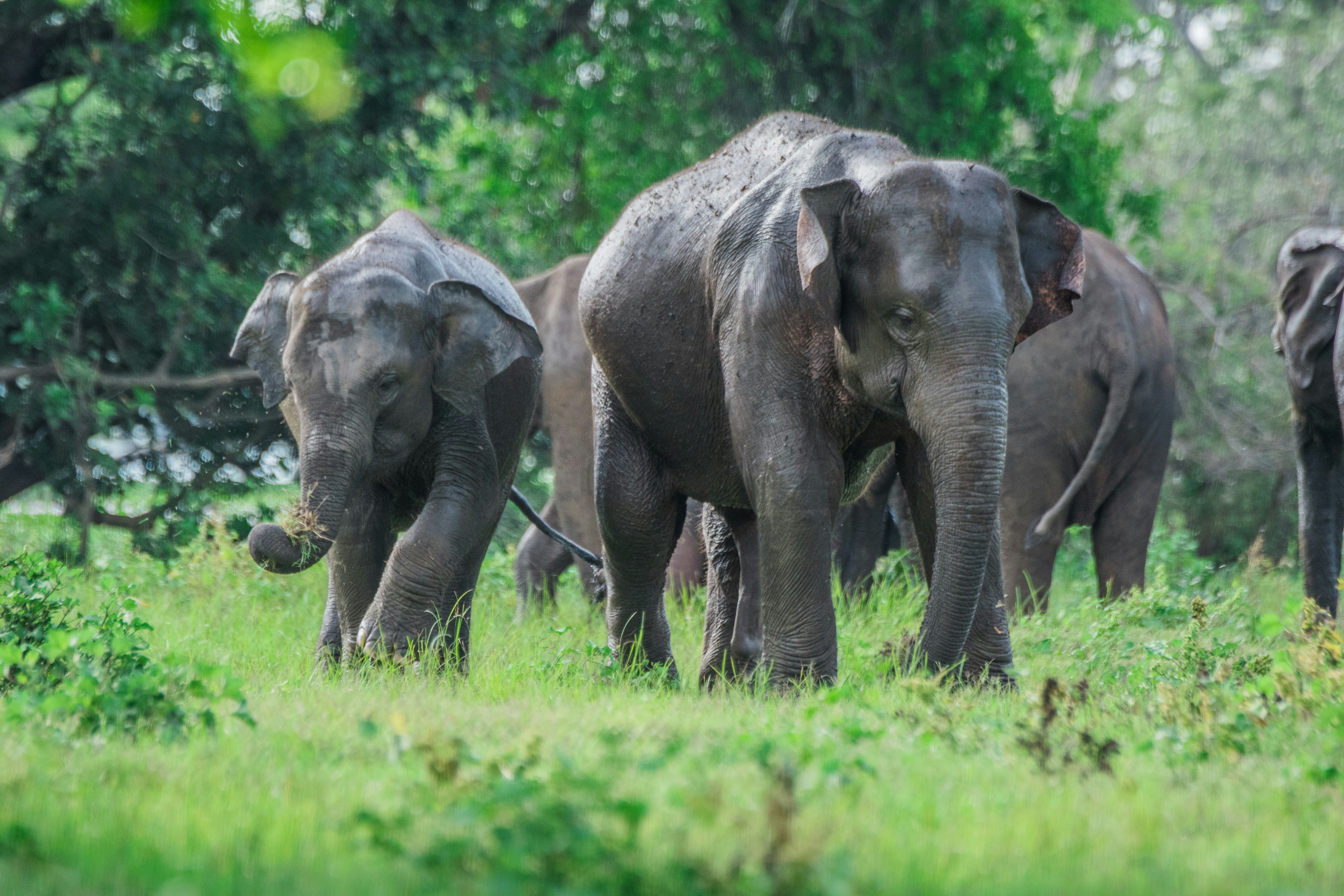
For travellers weighing the ethics of an elephant encounter on a Sri Lanka trip, the Transit Home is one of the few places we can recommend without hesitation. The feeding viewing is genuinely educational, the elephants behave like the wild animals they’re destined to remain, and the funding goes directly into rehabilitation rather than tourist entertainment. The image in our caption a glimpse of the wild they’re raised for — wild elephants on grassland — captures exactly what these calves grow up to become.
What You'll Experience
Plan around the feedings. There are typically four per day — usually 9am, noon, 3pm, and 6pm — with the visitor platform opening 30 minutes before each. Arrive early; the platform is small and fills quickly, particularly during peak season. Pay the entrance fee at the gate; the fee is modest and supports the Wildlife Department’s rehabilitation work.
The platform is a long elevated walkway looking down on the feeding fence. The bush behind the fence is thick; the elephants live in a managed but wild stretch of forest, and they appear at the fence only at feeding times. You wait. The whistle blows. From three or four directions, calves emerge — some four-year-olds nearly two metres tall, some smaller babies still finding their feet — and walk single-file to their assigned feeding stations along the fence.
Keepers in green Wildlife Department uniforms wait at the rail with large rubber-stoppered bottles of formula. Each calf gets a bottle. The drinking is fast and a little messy; some milk goes on the ground; the babies push at each other in the line. The whole feeding takes about 10 minutes. Then the calves drift back into the forest and you don’t see them again until the next feeding.
The visit takes 90 minutes including the wait, the feeding itself, and a small interpretive centre with information about specific rescued calves and the rehabilitation programme. There’s no merchandise, no rides, no photo opportunities with the elephants beyond the feeding-fence platform. This is a deliberately low-touch tourism experience and it works precisely because of that. For families with children, it’s also a powerful counterpoint to a Udawalawe National Park safari the next morning — a chance to see, up close, the conservation work that keeps the wild herd healthy.
Practical Details
- Location: Adjoining Udawalawe National Park, Uva Province
- Getting There: A 10-minute drive from any Udawalawe area hotel, on the road to the park entrance. Easiest with a private driver.
- Best Time to Visit: Year-round. Schedule around a feeding time (9am, 12pm, 3pm, 6pm — verify current schedule on the day). Avoid Sundays and Sri Lankan holidays unless you’re comfortable with crowds.
- Entry: Around USD 5–10 per person at the gate (verify current rates).
- What to Bring: Hat, sunscreen, water, light layer for the open platform, camera with zoom (you’re viewing from 20–30 metres away).
Pair It With
- Udawalawe National Park — A pre-dawn safari followed by a noon feeding visit — a perfect Udawalawe day.
- Yala National Park — On a longer southern itinerary — Yala leopards and Udawalawe elephants in two consecutive mornings.
- Ella Rock — Continuing up to the hill country — a half-day drive from Udawalawe.
Why It Belongs on Your Sri Lanka Journey
The Elephant Transit Home is the Sri Lankan elephant encounter we feel comfortable building into trip plans, and the one we recommend over the more commercial alternatives. It pairs naturally with a morning Udawalawe safari for a complete elephant day — the wild herd in the morning, the rescued calves at noon. For Belgian and Dutch travellers thinking carefully about animal welfare on holiday, this is the easy answer. Visit, watch, learn, and don’t expect to touch.
Plan your visit to Elephant Transit Home with DBRO
We design slow, considered Sri Lanka itineraries from our base on the island, with a particular ear for travellers from the Netherlands and Belgium. If Elephant Transit Home is on your shortlist, we’ll fit it into a route that lets it breathe.
Useful next reads:

