
A small wooden boat pushes off from the reeds. The boatman cuts the engine after a hundred metres and reaches for his bamboo pole. From here it’s push-and-glide, push-and-glide, and the only sounds are the pole against the water and a long-necked egret somewhere in the reeds.
The Story
The Batticaloa Lagoon is one of the largest brackish-water wetlands in Sri Lanka, running roughly 56 kilometres along the east coast and separated from the Indian Ocean by a long thin sandbar. The lagoon is shallow — rarely more than 3 metres deep — and ringed by mangroves, paddy fields, and small fishing villages. It’s ecologically rich: hundreds of bird species, brackish-water crocodiles, sea turtles in the lagoon mouth, and an unusually diverse fish community. For most of its history, the lagoon has been the centre of the Batticaloa region’s economic life.
The lagoon’s most famous local story is the singing fish. On still nights — particularly during the warm months between April and September — fishermen along the lagoon report hearing a low, resonant musical hum from the water. The phenomenon has been documented for centuries; theories range from currents resonating in the lagoon’s narrow channels, to the courtship sounds of certain catfish species, to the shells of clams clicking together. Recent biological work suggests the fish-call hypothesis is most likely. You’re unlikely to hear it from a daytime boat trip, but Batticaloa town remembers it: the singing fish are part of the local identity.
Pasikuda — the small resort area about 30 kilometres north of Batticaloa town — is the easiest base for a lagoon trip. The 26-year civil war hit this stretch of coast hard; tourism only really restarted after 2009, and Pasikuda has been steadily redeveloped since 2012 as a quieter alternative to the south coast’s busier beaches. The east-coast season runs roughly May through September — exactly opposite to the south coast’s November–April window — which makes this region the natural answer for travellers from the Netherlands or Belgium visiting in the European summer.
What You'll Experience
Take the boat in the late afternoon, when the heat eases and the light goes soft. Your driver will take you the 30 minutes south from Pasikuda to one of several small jetties on the lagoon — Kallady Bridge is a popular launch point, with a clear view of the iconic 1924 colonial-era iron bridge. The boats are small wooden punts; life jackets are provided. You should be the only group on the water for most of the trip.
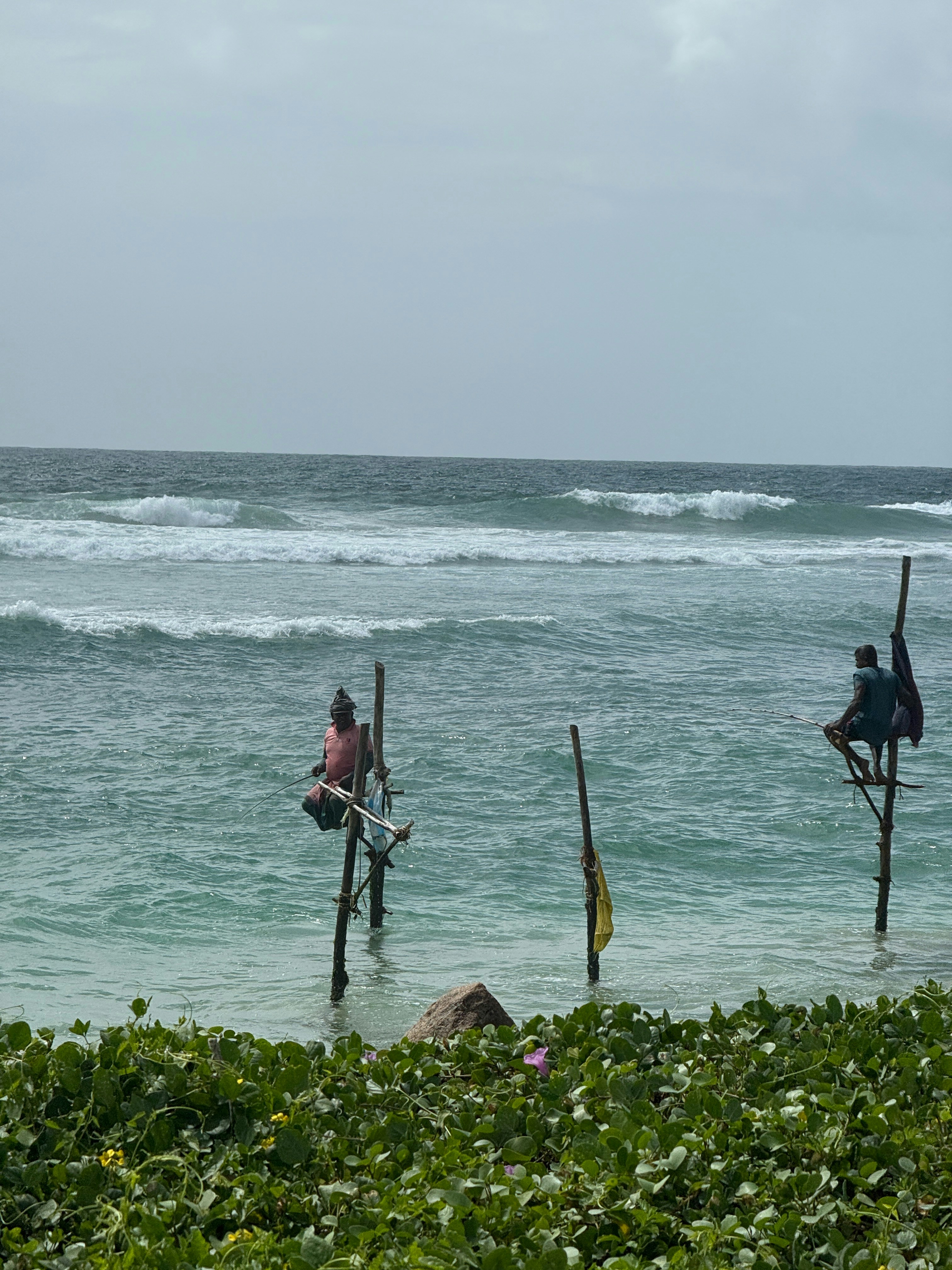
The boatman starts the small engine to leave the jetty. Past the first bend, the engine cuts. He reaches for the long bamboo pole, and the boat slides quietly through reeds and mangrove channels. Crabs the size of coins scuttle on the bark of the mangrove roots. A brahminy kite circles overhead. A whiskered tern flies past, low and fast. The image in our caption east-coast water at low afternoon light — calm, glassy, near-mirrored — is exactly the texture of the lagoon at this hour.
Further out, in the deeper channels, you may pass small stilt houses on the water — fishing posts where men spend the night setting traps. A few of these are still in active use; the maritime craft caught in our caption a craft kept alive by lagoon-side villages refers to the same lagoon ecology. Look for the brackish-water crocodile (small, shy, rarely visible) and, in the right months, sea turtles in the deeper sections.
Return to the jetty at sunset. The sky over the lagoon goes from bronze to red. You walk back to the car with the smell of warm grass and lagoon water on your clothes; back at Pasikuda for a swim and an unhurried dinner.
Practical Details
- Location: Stretching from Batticaloa town northwards along the eastern coast, Eastern Province
- Getting There: About 45 minutes by car south from Pasikuda to a launch jetty near Kallady or Batticaloa town. Easiest with a private driver.
- Best Time to Visit: May to September, the east-coast dry season. Avoid the north-east monsoon (November–January) when the lagoon is rougher and the access roads can flood.
- Entry: Boat tours around USD 25–40 per person depending on group size and operator (verify current rates).
- What to Bring: Long-sleeve layer and trousers for sunset mosquitoes, insect repellent, sunscreen, hat, sunglasses, water, camera with zoom for birds.
Pair It With
- Pasikuda Beach — Return to the beach for an unhurried evening — combine the lagoon with a swim and dinner.
- Kallady Bridge — The 1924 colonial iron bridge near Batticaloa — a 5-minute stop on the way to or from the lagoon.
- Pigeon Island National Park — On a longer east-coast loop, combine with a snorkel trip from Trincomalee.
Why It Belongs on Your Sri Lanka Journey
Batticaloa Lagoon is for travellers who would rather be quietly alone with a heron and a bamboo pole than on a tourist boat with twenty other people. It pairs perfectly with a slow Pasikuda stay — 3 or 4 nights of beach and one afternoon on the lagoon. We typically build it into an east-coast itinerary that runs Trincomalee → Pasikuda → Arugam Bay during the European summer, when the south and west coasts are under monsoon and the east is at its most generous.
Plan your visit to Batticaloa Lagoon with DBRO
We design slow, considered Sri Lanka itineraries from our base on the island, with a particular ear for travellers from the Netherlands and Belgium. If Batticaloa Lagoon is on your shortlist, we’ll fit it into a route that lets it breathe.
Useful next reads:

